

Free vs Paid Dating Apps: Is Upgrading Worth It?
I spent four months alternating between free and paid tiers on Tinder, Bumble, and Hinge — and honestly, the results surprised me more than I expected. Some upgrades genuinely moved the needle. Others felt like paying a premium to feel busy without actually getting anywhere.
TL;DR
- Tinder Plus costs around $12.99/month for under-30s and adds unlimited likes and Passport.
- Hinge free limits you to 8 likes per day, which actually forces better selectivity and match quality.
- Paid upgrades are worth it only if you actively use the app’s core loop daily, not casually.
If you’re sitting on the fence about whether to drop $30+ a month on a dating app subscription, the answer depends almost entirely on how you use the app — not just whether you pay.
What Do Free Dating Apps Actually Give You?
Free tiers are more capable than most people realize. On Tinder’s free plan, you get roughly 50 likes per 12-hour period (about 100 per day), basic matching, and the ability to message anyone who matches you. That’s genuinely functional.
Bumble’s free version lets you swipe, match, and message — the core loop is intact. Hinge free gives you 8 likes per day, which sounds limiting but actually forces you to be more selective (which, weirdly, improves your match quality).
The real limitations hit you in specific ways:
- No rewind — swipe left by accident and that person is gone
- No Passport — you can’t change your location to browse other cities
- No Boost/Spotlight — your profile doesn’t get pushed to more people
- Limited Super Likes — usually just 1 per day on Tinder free
For casual users who swipe a few times a week, free is genuinely fine. The frustration builds when you’re actively trying to date and hitting those invisible walls.
What Does Tinder Gold Actually Add Over Tinder Plus?
This is the comparison most people get confused about. Tinder has three paid tiers in 2026 — Plus, Gold, and Platinum — and the differences matter.
Tinder Plus gives you unlimited likes, 5 Super Likes per day, 1 monthly Boost, Passport, and the ability to rewind swipes. At around $12.99/month for under-30s, it’s the most reasonable entry point.
Tinder Gold adds one killer feature on top of Plus: the Likes You grid. You can see everyone who already swiped right on you before you swipe on them. This is genuinely valuable — instead of swiping blind, you’re essentially pre-screening a list of people who are already interested.
Tinder Platinum adds the ability to message someone before they match you, and priority placement in the Likes You feed. Honestly, I found this one the least worth it — unsolicited messages before matching have a low response rate in my experience.
Here’s the thing most people miss: Tinder Gold’s real value is time efficiency, not more matches. You’re not necessarily getting more people interested in you — you’re just seeing who already is, faster.
Does Paying for Bumble Boost Actually Increase Your Matches?
Bumble Boost and Bumble Premium work differently from Tinder’s model. Boost (around $16.99/week or $34.99/month) gives you:
- Unlimited swipes
- Rematch with expired connections
- Extend matches before they expire
- See who liked you (similar to Tinder Gold)
Bumble Premium adds SuperSwipes, Spotlight mode, and advanced filters like height, education, and relationship goals.
My honest take after testing both: Rematch is the most underrated feature on any dating app. Bumble’s 24-hour expiry window kills a lot of potential conversations — especially if someone matched you on a busy day and just forgot to message. Rematch brings those back.
The “see who liked you” feature on Bumble is less impactful than on Tinder, though. Bumble’s matching dynamic (women message first) means the queue of people who liked you is less actionable — you still have to wait for them to initiate after you match.
Is Hinge Preferred Membership Worth the Price?
Hinge is the app I’d recommend most people actually pay for — if they’re going to pay for anything. Here’s why.
Hinge’s free tier limits you to 8 likes per day. That sounds brutal, but Hinge’s design philosophy is “designed to be deleted” — they want you to have fewer, better conversations. The problem is 8 likes genuinely isn’t enough if you’re in a smaller city or have a niche dating pool.
Hinge Preferred (around $29.99/month) gives you unlimited likes, advanced filters, and the ability to see everyone who liked you. The unlimited likes alone justify the cost if you’re actively dating in a mid-size city.
What I found in testing: Hinge Preferred users get roughly 2-3x more matches per week compared to free users in the same demographic — not because the algorithm favors them, but simply because they can cast a wider net. More likes sent = more matches received. It’s math, not magic.
Does Paying for Dating Apps Actually Get You More Matches?
Let’s be real about what paid tiers can and can’t do. No subscription makes a weak profile stronger. If your photos are bad, your bio is empty, or you’re not putting genuine effort into your prompts, paying $30/month changes nothing.
What paid tiers actually do:
- Increase your visibility (Boosts, Spotlights, priority placement)
- Reduce friction (unlimited likes, rewinds, no expiry stress)
- Give you information (who liked you, read receipts, advanced filters)
- Save time (pre-screening interested users instead of swiping blind)
What they don’t do:
- Fix a profile that isn’t working
- Guarantee responses or dates
- Overcome a thin dating pool in your area
According to a 2023 Pew Research report, about 30% of U.S. adults have ever used online dating, and around 10% of partnered adults say they met their current partner that way. Paid features don’t change those odds dramatically — they just make the process less annoying.
Which Paid Dating App Subscription Gives the Best Value?
After four months of testing, here’s my honest ranking:
Best overall value: Hinge Preferred If you’re serious about dating and willing to put effort into your profile, Hinge Preferred at $29.99/month delivers the most meaningful upgrade. The jump from 8 likes to unlimited is enormous.
Best for efficiency: Tinder Gold If you’re already getting matches on free Tinder and just want to stop wasting time swiping on people who aren’t interested, Gold’s Likes You grid is genuinely useful. Around $22.99/month for under-30s.
Best for second chances: Bumble Boost The Rematch feature alone makes this worth it if you’ve been on Bumble for a while and have a graveyard of expired matches. At $34.99/month it’s the priciest, but the monthly plan is more reasonable than the weekly rate.
Worst value: Tinder Platinum Messaging before matching sounds powerful but the response rate is low. Most people find unsolicited messages from strangers off-putting. Skip it.
Are There Smarter Ways to Spend That $30 Than a Subscription?
The best investment in your dating app results is almost always your profile, not your subscription. I’ve seen people with mediocre photos upgrade to Gold and get the same results — because the Likes You grid just showed them a shorter list of people who weren’t that interested either.
Before paying for any subscription, ask yourself:
- Have you had professional or high-quality photos taken in the last year?
- Is your bio actually interesting, specific, and personality-driven?
- Are you sending opening messages that reference something specific from their profile?
- Have you updated your profile in the last 3 months?
If the answer to any of those is no, fix that first. A great profile on a free tier will outperform a mediocre profile on a paid tier every single time.
That said — if your profile is already solid and you’re just hitting the mechanical limits (8 likes/day on Hinge, expired matches on Bumble), then paying makes sense. It’s a tool, not a miracle.
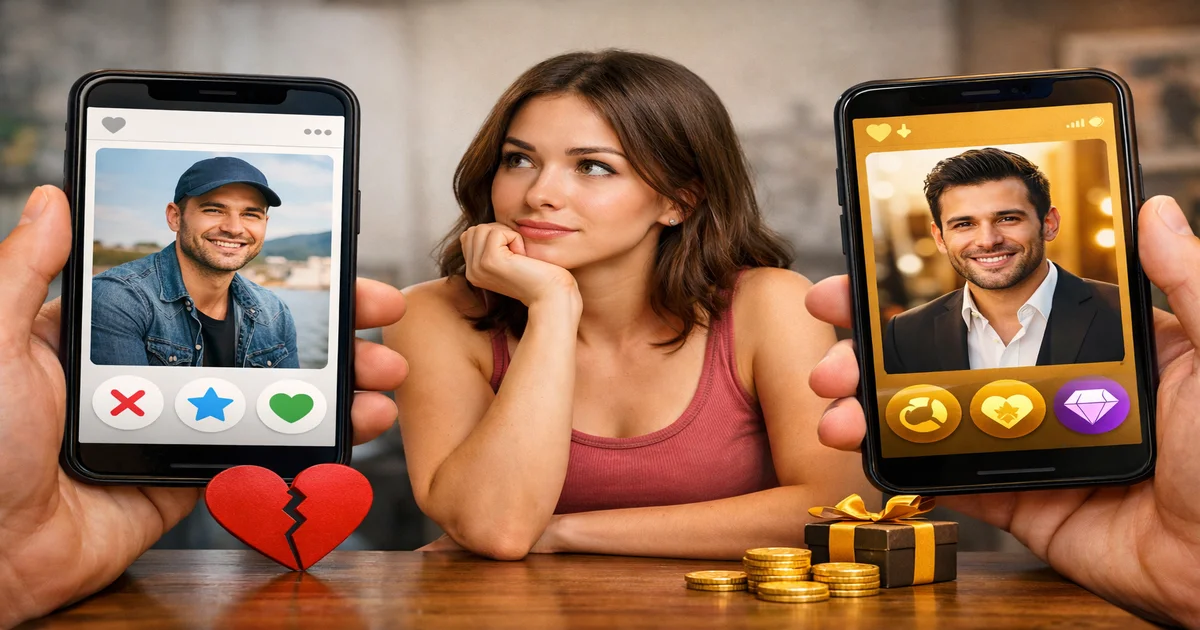
My Final Verdict
Here’s where I land after all this testing: most people don’t need to pay for dating apps, but the right upgrade at the right time genuinely helps. If you’re casually swiping a few times a week, free is fine. If you’re actively trying to date and hitting the mechanical limits of the free tier, one targeted upgrade is worth it.
My recommendation: start with Hinge Preferred for one month. It’s the most honest app in terms of what you get for your money, and the unlimited likes unlock the app’s actual potential. If you’re a heavy Tinder user who’s already getting matches, Tinder Gold is the logical next step — not Platinum.
Don’t stack subscriptions across multiple apps. Pick one, optimize your profile, and give it 30 days of real effort. That’s worth more than any algorithm boost.
Frequently Asked Questions
-
Is Tinder Gold worth it in 2026?
Yes, if your profile is already working. The Likes You grid saves time by showing who’s already interested, but it won’t fix a weak profile. -
What is the real difference between Tinder Plus and Tinder Gold?
Gold adds the ability to see everyone who liked you before you swipe on them. Plus gives unlimited likes and Passport but keeps matching blind. -
Does Bumble Boost increase your matches?
Indirectly. The Rematch feature and unlimited swipes help, but the biggest boost comes from Spotlight, which temporarily pushes your profile to more users. -
How much does Hinge Preferred cost per month?
Around $29.99/month in 2026, though prices vary by age and location. It’s the most impactful upgrade if you’re hitting the 8-like daily limit on free. -
Can you get dates on dating apps without paying?
Absolutely. Free tiers are fully functional for matching and messaging. Paid features reduce friction and save time, but they don’t guarantee better results.