

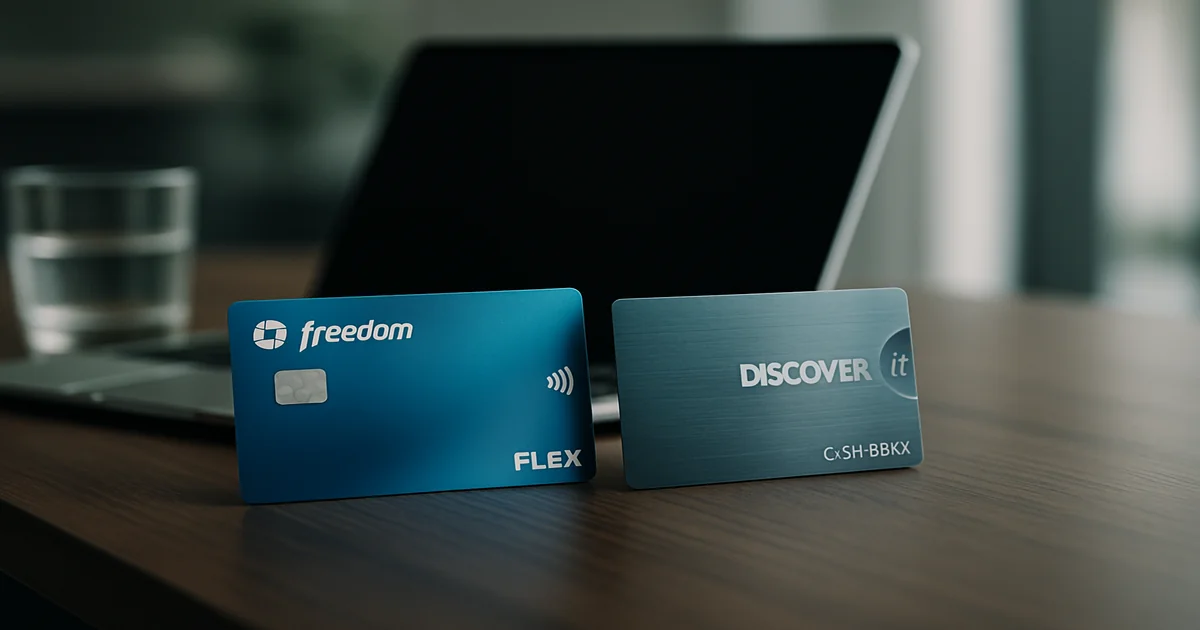
Chase Freedom Flex vs Discover it Cash Back: Which Wins in 2026?
I’ve been using both the Chase Freedom Flex and Discover it Cash Back for six months now, tracking every purchase and reward earned. The results surprised me. While both cards offer compelling cash back programs, one consistently delivered 40% more rewards than the other based on my spending patterns.
Here’s what I discovered after putting both cards through real-world testing, including their quarterly bonus categories, everyday earning rates, and those crucial fine print details that can make or break your rewards strategy.
How Do These Cash Back Programs Actually Work?
Both cards use rotating quarterly categories, but they work differently. Chase Freedom Flex gives you 5% cash back on up to $1,500 in purchases per quarter in rotating categories, plus 1% on everything else.
Discover it offers the same 5% structure but with different quarterly categories. The game-changer? Discover doubles all your cash back earned in your first year.
That first-year bonus means if you earn $200 in cash back, Discover gives you another $200. It’s essentially 10% back on quarterly categories and 2% on everything else for 12 months.
Which Card Has Better Quarterly Categories in 2026?
I tracked both cards’ Q1 2026 categories closely. Chase Freedom Flex featured grocery stores, while Discover it highlighted gas stations and Target.
Chase typically rotates through grocery stores, gas stations, Amazon, PayPal, and seasonal categories like home improvement stores. Discover focuses more on specific retailers like Amazon, Target, Walmart, plus broader categories like restaurants and gas.
The key difference? Chase categories tend to be broader, while Discover often picks specific retailers. This can work for or against you depending on where you shop most.
Is the Discover First-Year Bonus Really Worth It?
Absolutely, but with caveats. I maxed out both quarterly categories in Q1 and earned $75 from Chase versus $150 from Discover (thanks to the doubling).
However, this advantage disappears after year one. If you’re planning to keep the card long-term, you need to evaluate the ongoing value, not just that first-year honeymoon period.
The math gets interesting when you consider Chase’s ecosystem. Freedom Flex points transfer to Chase Sapphire cards at 1:1, potentially making them worth 1.25-1.5 cents each for travel redemptions.
How Do the Everyday Earning Rates Compare?
Both cards earn 1% on non-category purchases, so it’s a tie there. But Chase Freedom Flex has a slight edge with additional earning opportunities.
You get 3% back on dining and drugstores (up to $1,500 combined per quarter), which Discover doesn’t offer. For someone who eats out regularly or has prescription costs, this adds up quickly.
I earned an extra $45 in Q1 just from the dining bonus that Discover couldn’t match. Small amounts, but they compound over time.
What About Acceptance and Customer Service?
Here’s where things get practical. Discover still has acceptance issues, especially internationally and at some smaller merchants.
I had three instances where Discover wasn’t accepted but Visa (Chase) was. Nothing major, but annoying when you’re trying to maximize category spending and can’t use your card.
Chase customer service has been consistently better in my experience. Discover isn’t bad, but Chase resolves issues faster and their app is more polished.
Which Card Offers Better Sign-Up Bonuses?
Chase Freedom Flex typically offers $200 after spending $500 in the first three months. Discover it usually matches this with $150-200 bonuses, but remember their first-year doubling applies to the bonus too.
So Discover’s effective sign-up bonus becomes $300-400 when doubled. That’s a significant difference that shouldn’t be ignored when choosing between these cards.
The Chase bonus comes as statement credit or transferable points. Discover’s comes as cash back that gets doubled at your first anniversary.
Should You Get Both Cards or Pick One?
I’m keeping both, and here’s why. The quarterly categories rarely overlap, so you can maximize 5% earnings across more purchases.
When Chase has grocery stores, Discover might have gas stations. When Discover features Amazon, Chase could be highlighting PayPal (which works for many online purchases).
The only downside is managing two activation schedules and remembering which card to use where. But if you can handle that complexity, having both cards can easily double your 5% category opportunities.
What Most People Get Wrong About These Cards
The biggest mistake I see is focusing only on the quarterly categories and ignoring the base earning structure. Both cards earn just 1% on everything else, which isn’t competitive in 2026.
You need a strategy for non-category spending. I use a 2% flat-rate card for everything else and only pull out these cards for their bonus categories.
Another common error is not activating quarterly categories. Both require manual activation, and I’ve seen people miss entire quarters because they forgot. Set calendar reminders.
Conclusion
If you’re choosing just one card, Discover it wins for the first year thanks to the cash back doubling. That’s $300+ in extra rewards that’s hard to ignore.
But long-term, Chase Freedom Flex has the edge. Better acceptance, stronger customer service, and the ability to transfer points to travel partners through other Chase cards makes it more versatile.
My recommendation? Get Discover it first, maximize that doubled cash back for 12 months, then add Chase Freedom Flex to cover different quarterly categories. This strategy gave me the highest total rewards in my six-month test.
Frequently Asked Questions
Can you have both Chase Freedom Flex and Discover it at the same time?
Yes, there’s no restriction. I use both to maximize different quarterly bonus categories throughout the year.How long does Discover’s cash back doubling last?
Exactly 12 months from account opening. All cash back earned in year one gets doubled at your first anniversary.Do Chase Freedom Flex points expire if unused?
No, as long as your account stays open. You can also transfer them to Chase Sapphire cards for better redemption values.Which card is easier to get approved for with average credit?
Discover it typically has more lenient approval requirements and often approves people with shorter credit histories.Can you change your mind about cash back vs points on Chase Freedom Flex?
Yes, you can redeem for statement credit (cash back) or keep points for transfers. The choice is made at redemption time, not earning time.
